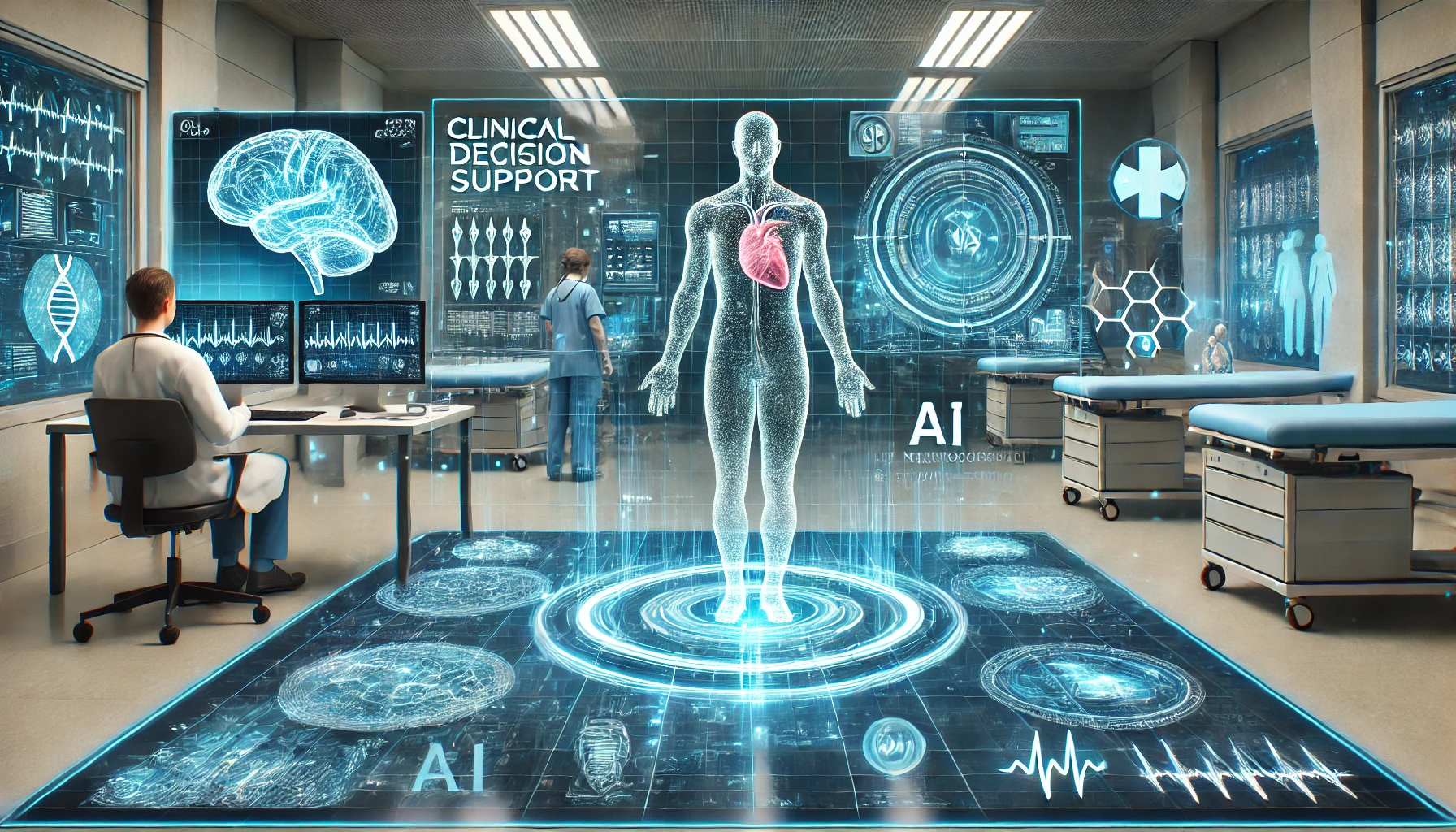
The promise of digital twins in medicine is profound: high-fidelity computational models of individual patients that can predict how they will respond to treatments, simulate disease progression, and enable truly personalized medicine. But current approaches fall short. We need a next-generation framework that combines mechanistic understanding with data-driven learning.
The Limitations of Current Approaches
Most digital twin efforts in medicine today fall into two categories, each with significant limitations:
Pure mechanistic models: These are based on first-principles understanding of physiology—differential equations describing how organs function, how hormones regulate metabolism, how immune cells respond to pathogens. They're interpretable and grounded in biology, but they're too simplified. Real human physiology is far more complex than any set of equations can capture.
Pure data-driven models: These use machine learning to find patterns in large datasets—patient records, imaging, genomics. They can capture complex relationships, but they're black boxes. They can't explain why a prediction was made, and they often fail when applied to patients outside the training distribution.
Neither approach alone is sufficient for clinical use. We need a hybrid framework.
A State-Based Architecture
Our next-generation framework is built around the concept of state-based modeling. The human body is represented as a collection of interconnected states—the state of each organ system, the state of metabolic pathways, the state of the immune system, the state of gene expression.
Each state is defined by:
- State variables: Quantities that describe the current condition (e.g., blood glucose, heart rate, cytokine levels)
- State transitions: Rules that govern how states change over time (e.g., how insulin affects glucose uptake)
- State interactions: How states influence each other (e.g., how stress hormones affect immune function)
Rule-Based + Statistical: The Hybrid Approach
The framework combines three layers:
Layer 1: Mechanistic Rules
Core physiological processes are modeled using deterministic rules based on established medical knowledge. For example:
- Insulin secretion follows a glucose-dependent sigmoid curve
- Cardiac output is determined by stroke volume and heart rate (Starling's law)
- Immune cell activation follows receptor-ligand binding kinetics
Layer 2: Learned Corrections
Statistical models learn corrections to the mechanistic rules from real patient data. These corrections account for:
- Individual variations in physiology
- Complex interactions that rules miss
- Environmental and lifestyle factors
- Disease-specific modifications
Layer 3: Uncertainty Quantification
Every prediction includes uncertainty estimates—both epistemic (what we don't know) and aleatoric (inherent randomness). This enables:
- Confidence intervals on predictions
- Identification of when the model is uncertain
- Prioritization of additional data collection
Multi-Organ Integration
A key innovation is the integration of multiple organ systems into a unified model. Rather than modeling organs in isolation, the framework captures how they interact:
- Cardiovascular ↔ Metabolic: How cardiac output affects glucose delivery to tissues
- Immune ↔ Endocrine: How stress hormones suppress immune function
- Hepatic ↔ Renal: How liver metabolism affects kidney function
- Neurological ↔ All systems: How the nervous system regulates everything
These interactions are modeled using both mechanistic understanding (e.g., known hormonal pathways) and learned patterns from data (e.g., correlations discovered in patient cohorts).
Personalization Through Calibration
The framework personalizes to individual patients through a calibration process:
- Initialization: Start with population-average parameters
- Data assimilation: Update state estimates as new patient data arrives (lab results, vital signs, imaging)
- Parameter estimation: Learn patient-specific parameters (e.g., insulin sensitivity, drug metabolism rates)
- Validation: Test predictions against observed outcomes
- Refinement: Continuously update as more data becomes available
This calibration process makes the digital twin increasingly accurate for that specific patient over time.
Applications: Drug Discovery and Treatment
This framework enables several powerful applications:
Drug discovery: Simulate how candidate drugs affect the digital twin across multiple organ systems. Predict both efficacy and side effects before expensive clinical trials. Identify patient subgroups most likely to benefit.
Treatment optimization: For a specific patient, simulate different treatment regimens and predict outcomes. Find the optimal dosing, timing, and combination of interventions.
Disease progression: Model how a disease will progress in a specific patient, enabling early intervention and personalized monitoring strategies.
Clinical trial design: Use digital twins to identify optimal trial endpoints, patient selection criteria, and sample sizes.
Challenges and Future Directions
Building this framework faces several challenges:
- Data requirements: Need high-quality, longitudinal patient data across multiple organ systems
- Computational complexity: Simulating multiple organ systems in real-time requires significant computational resources
- Validation: Need rigorous validation against real-world outcomes
- Regulatory approval: Must demonstrate safety and efficacy for clinical use
But the potential is enormous. A next-generation digital twin framework could transform medicine from reactive to predictive, from population-based to truly personalized.
Conclusion
The next generation of medical digital twins will combine the interpretability of mechanistic models with the power of data-driven learning. By building state-based frameworks that integrate multiple organ systems and personalize to individual patients, we can create tools that truly enable precision medicine.
This is not just a technical challenge—it's a fundamental shift in how we understand and treat disease. The framework we're building today will be the foundation for the personalized medicine of tomorrow.